Uman and Sofiyivka: what to see in the legendary park and the town around it
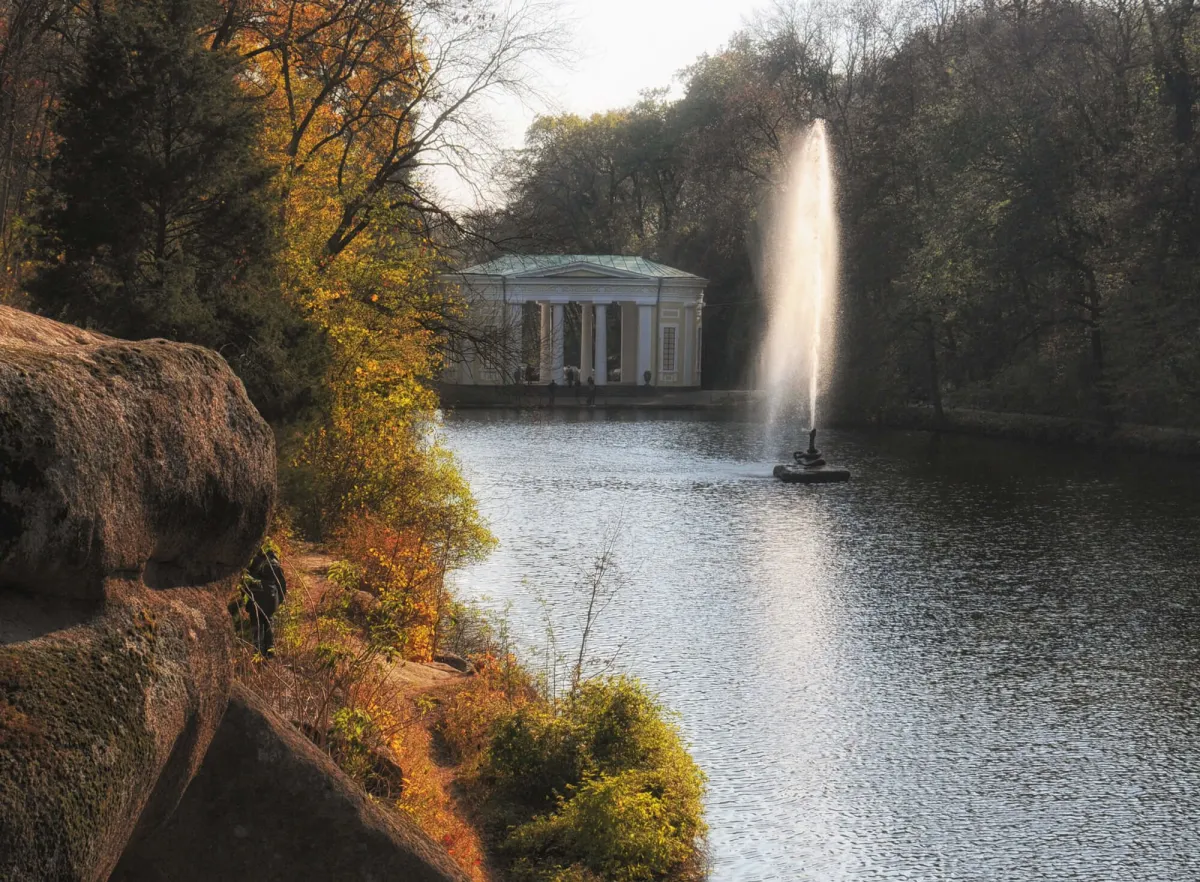
Uman is a town people visit mainly for one place. One day is enough to see that Sofiyivka is more than a beautiful park: it is a story of love, engineering daring and the fashion for antiquity, told in stone and water. After the walk, the town itself is worth a stroll too.
A park given as a name-day present
Sofiyivka was founded in 1796 by Count Stanisław Szczęsny Potocki, the owner of Uman, and named after his wife Sofia. It took six years to build, with military engineer Ludwig Metzel in charge of design and construction. The idea was bold: to turn the rocky valley of the Kamianka River into a landscape that recalled scenes from ancient myths.
Today it is the Sofiyivka National Dendrological Park of the National Academy of Sciences of Ukraine, covering almost 180 hectares. More than three thousand species and forms of trees and shrubs grow here, both native and exotic. In 2007 the park was named one of the Seven Wonders of Ukraine, and it is on UNESCO’s tentative World Heritage list.
What not to miss in Sofiyivka
- The underground river Acheron. A boat with visitors sails through a tunnel about 200 metres long, just as souls crossed into the underworld in the myths. Boarding is near the Amsterdam Lock.
- The Island of Love. An artificial island in the Upper Pond with the Pink Pavilion at its centre. It was once called the Island of Anti-Circe.
- The Tarpeian Rock, the Great Waterfall and the Lion Grotto. The park’s most photogenic stone “sets”, especially after rain, when the water roars at full strength.
- The Scylla Grotto and the Grotto of Fear and Doubt. Gloomy, mysterious corners for those who love legends.
- The Flora Pavilion. A classical colonnaded pavilion where most visits begin.
Guides like to tell about the “room in the waterfall”, a place for secret talks where an opened sluice dropped a curtain of water so no one could overhear.
In the warm season you can hire a pedal boat on the ponds. The park fully opens its tourist season in spring, on 1 April. Opening hours and ticket prices change from year to year, so check them on the park’s website sofievka.org before you go.
Uman beyond the park
If you still have energy, walk through the centre. The Church of the Assumption of the Blessed Virgin Mary is a late classicist landmark that still holds services, and part of it houses the Uman Art Gallery. The Basilian Monastery dates back to the 17th century and has underground passages; its walls are linked both to the Koliivshchyna uprising and to the stage productions of Les Kurbas.
It is worth stopping by the Museum of Culture and Everyday Life of the Uman Region, with objects from noble, merchant and peasant life, and the memorial apartment museum of Nadiya Surovtsova, a writer and public figure of the Ukrainian People’s Republic era. For families with children there is the Nova Sofiyivka fantasy park, where a Japanese garden stands next to a Ukrainian manor.
Uman is also known worldwide as a pilgrimage site for Breslov Hasidim: their spiritual leader Rebbe Nachman is buried here.
How to get there
Uman lies on the Kyiv–Odesa highway (M05). Many buses run from Kyiv every day, and the journey takes a few hours. It is best to leave in the morning so you have at least half a day for Sofiyivka.
Tip: wear comfortable shoes, as the park has many stairs, stone paths and climbs. It is at its best in spring, when everything is in bloom, and in autumn, when the maples and oaks turn gold and crimson.
More articles